
CU50 + KPV10 + BPC10
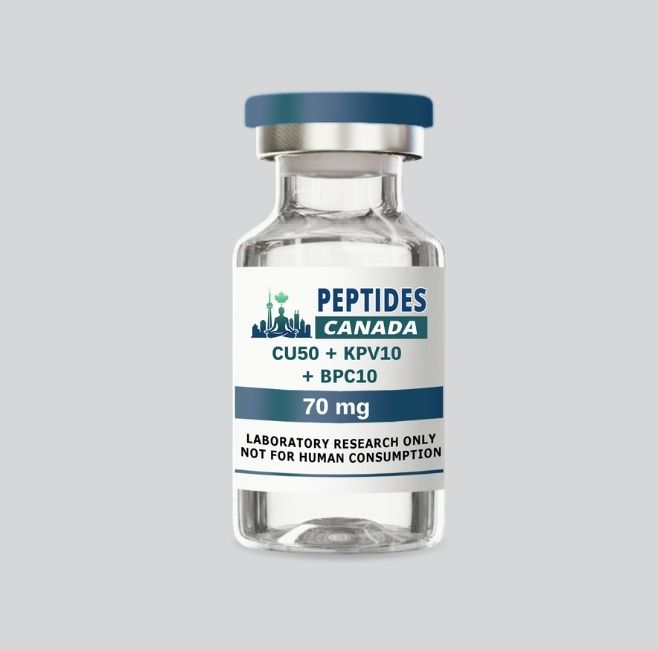
CU50 + KPV10 + BPC10 is a multi-peptide research formulation used in studies involving extracellular matrix regulation, inflammation-related signalling, angiogenesis-related mechanisms, and tissue-repair models. The formulation combines GHK-Cu, KPV, and a BPC-related peptide component for research into complementary peptide pathways involved in cellular response and repair biology.
CU50 + KPV10 + BPC10
Sale!8%
CU50 + KPV10 + BPC10 is a multi-peptide research formulation used in studies involving extracellular matrix regulation, inflammation-related signalling, angiogenesis-related mechanisms, and tissue-repair models. The formulation combines GHK-Cu, KPV, and a BPC-related peptide component for research into complementary peptide pathways involved in cellular response and repair biology.
$134.00
Buy more, save more!
-
Save 2%
Buy 3, get $2.50 off each
$134.00Per item: $131.50Total price: $394.50 -
Save 3%
Buy 5, get $3.75 off each
$134.00Per item: $130.25Total price: $651.25 -
Save 6%
Buy 10, get $7.50 off each
$134.00Per item: $126.50Total price: $1,265.00
$145.00$134.00

99+% PURITY
All peptides are third-party lab tested.

SECURE PAYMENT
Your payments are secure with our private security network.

FREE SHIPPING
for orders over $250
Description
Additional information
Reviews (0)
CU50, KPV10, and BPC10 form a research peptide combination with complementary antimicrobial, anti-inflammatory, and tissue-repair properties.
- CU50 is understood to refer to GHK-Cu 50mg, a copper-binding peptide complex studied for its role in collagen regulation, dermal fibroblast activity, skin-repair models, wound-healing research, and extracellular matrix remodelling.
- KPV10 refers to KPV, the C-terminal tripeptide fragment of alpha-melanocyte-stimulating hormone (α-MSH). KPV is studied for anti-inflammatory activity, including effects on NF-κB signalling, cytokine-related pathways, and epithelial or immune-cell models.
- BPC10 appears to refer to a BPC-related peptide component, although its exact identity should be confirmed from the client’s formula sheet. If associated with BPC-157, it should be described cautiously as a BPC-related research peptide studied in relation to tissue-repair, angiogenesis-related, nitric-oxide-related, and gastrointestinal models, primarily in preclinical research.
Together, these peptides work proposedly and experimentally to control infection, reduce inflammation, stimulate angiogenesis, and accelerate tissue healing through multiple complementary biological pathways in preclinical models, with limited confirmed human clinical evidence.
| Strength Variation |
|---|

There are no reviews yet.